


Read This Before You Purchase an LED Light Therapy Mask
IN THIS ARTICLE:
- 01 Wavelength
- 02 Number of LEDs
- 03 LED Density and Distance From the Skin
- 04 Irradiance and Dose
- 05 Time
- 06 Coverage Area
- 07 Safety and Certification
- 08 Budget, Warranty and Returns
- 09 Comfort and Personal Preference
- 10 LumaLux Face V2 Specs
- 11 FAQs
- 12 The Takeaway: What To Look For in a Red Light Therapy Mask
9-minute read
Summary: Look past the marketing and check the specs: wavelengths, LED count and fit, power and session time, safety, comfort and price.
It's tempting to choose an LED mask with the best ad campaign or the widest social media reach, but don't let marketing hype outshine what really matters: device specifications.
Becoming more tech literate with your beauty devices is the key to investing in the highest quality products that deliver on their claims.
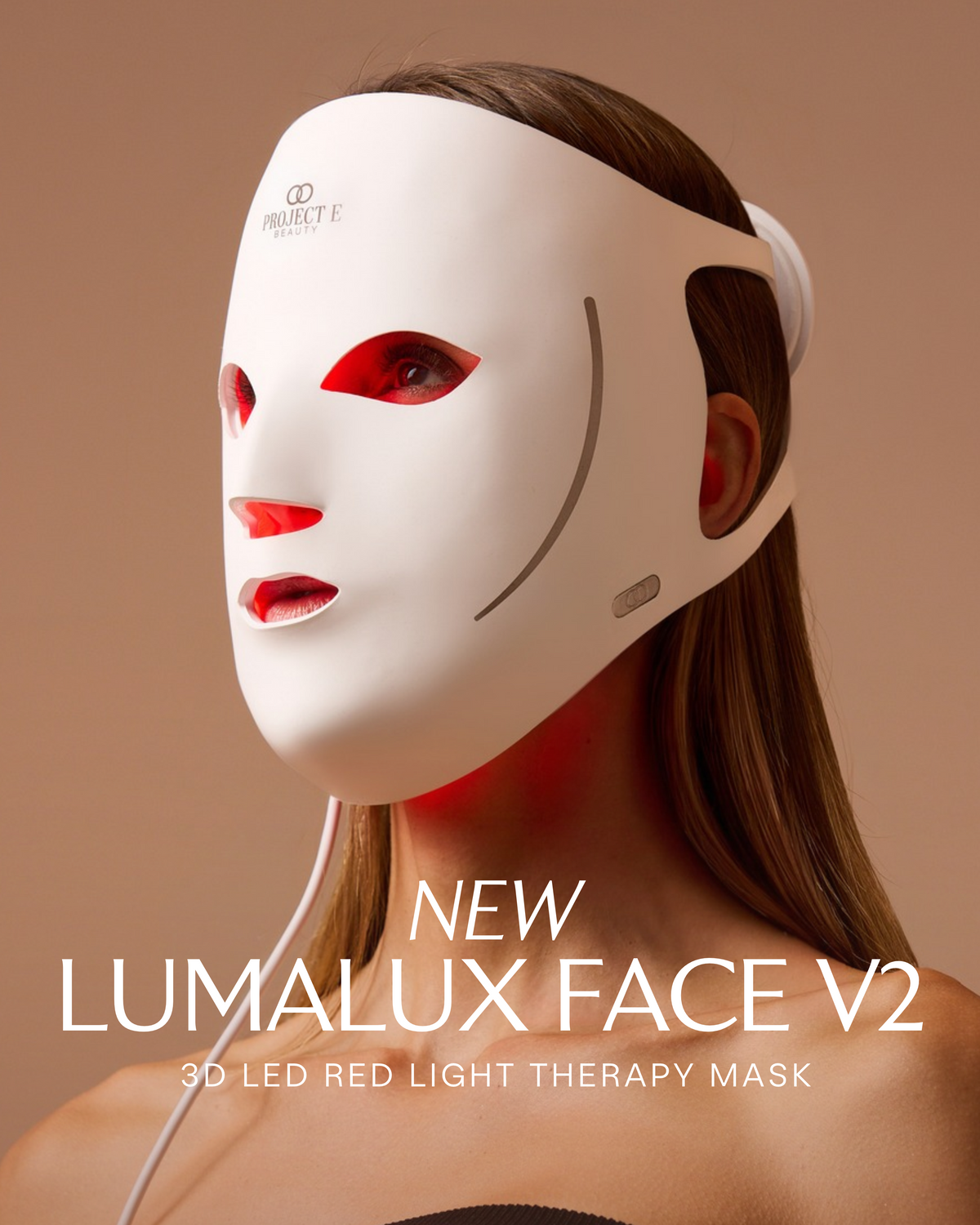
Certain variables, such as the number of LEDs, wavelength precision, irradiance and total energy output, determine how well a device will ultimately perform. Below we take you through what to look for in a red light therapy mask and the personal factors to consider before investing, with the specs of our LumaLux Face V2 as a reference point.
Wavelength
The skin absorbs light at different wavelengths, and each one reaches a different layer of the skin to trigger cellular responses known to improve skin health and appearance. More colors don't automatically make a better mask. What matters is whether a device uses clinically researched wavelengths, and whether each sits in its optimal range. LumaLux Face V2 uses four clinically proven wavelengths: red, infrared, deep infrared and blue. For a closer look at how they differ, see red light vs infrared vs deep infrared.

Red (630nm)
Red light, with wavelengths between 620 and 750nm, penetrates the deepest of all visible light, making it the ideal option to trigger collagen synthesis and cell regeneration. Even within this range, an optimal red light wavelength of between 630 and 660nm delivers the most effective skin treatment. LumaLux Face V2 uses red light at 630nm.
Infrared (830–850nm)
Infrared light exists on the invisible spectrum and penetrates deeper than red light. It can even reach underlying tissue and muscles, making it an effective therapy for pain and inflammation. Infrared wavelengths range from 700 to 1,000nm, with an optimal wavelength of around 830–850nm to trigger mitochondrial activity and boost cell regeneration. LumaLux Face V2 uses infrared light at 830nm.
Deep Infrared (1072nm)
Also on the invisible light spectrum, deep infrared wavelengths range between 1,000 and 1,400nm. Deep infrared light is a particularly powerful treatment for deep static wrinkles and areas of the face and neck prone to deep wrinkle formation, such as crow's feet, 11 lines, marionette lines and the forehead. It is also suitable for thicker skin. LumaLux Face V2 includes deep infrared light at 1072nm.
Blue (415–460nm)
Blue light has the shortest wavelength on the visible light spectrum, ranging from 415 to 470nm. It is an effective acne treatment because its short, intense wavelength acts on the epidermal skin layer to target acne-causing bacteria and regulate excess oil production. LumaLux Face V2 uses blue light at 415nm.
Green and Other Colors
Some masks also include green light (around 520nm) for hyperpigmentation, as well as blended colors such as yellow, cyan, white and purple, which are combinations of red, green and blue. When comparing masks, check that the core wavelengths sit within their optimal ranges rather than simply counting colors. Not sure which colors your skin needs? Read which LED color is best for your skin type.
Number of LEDs
The number of LEDs is crucial in ensuring complete and even coverage of the treatment area. If LEDs are spaced too far apart, the effectiveness of the treatment is reduced. It's important to choose a device with high-quality LEDs and at least one safety certification. LumaLux Face V2 has 240 LED bulbs and 960 LEDs, more than 3x the LEDs of the average leading LED mask,* including 480 dedicated red LEDs for 140% more red light than the original LumaLux Face. LumaLux Face+ V2 carries the same array on both its face and neck pieces, for 1,920 LEDs in total.
Densely packed LEDs provide a more thorough skin treatment and significantly increase the total energy delivered. Just as you wouldn't apply moisturizer or serum to only part of your face, the same principle applies to LED light therapy.
The number of LEDs becomes particularly critical when you consider the limitations of testing a device's power density based on a single LED, rather than assessing the total energy output of the entire device.
*Average published LED count of five leading LED face masks, Oct 2026.
LumaLux vs Competitor Brand

LED Density and Distance From the Skin
LED count tells you how many lights a mask has. LED density tells you how closely they're packed across the area being treated. Two masks with the same number of LEDs can perform very differently if one spreads its lights over a larger surface, or leaves gaps around the eyes, nose, mouth and jawline. When comparing masks, look at how evenly the LEDs are spaced across the whole face, not just the headline number.
Think of a room lit by a single lamp in the corner: one corner is bright, and the far side of the room is dim. Now picture the same room with lights spread evenly across the ceiling, close to every surface. There's no bright corner and no dim one, just consistent light everywhere. An LED mask works the same way: more light sources, spaced evenly and held close to the skin, means every part of the face receives the same treatment.
We measure this with a Light Density Rating (LDR): the number of LED bulbs per square centimetre of treatable facial surface area. LumaLux Face V2 has a Light Density Rating (LDR) of 0.72, nearly 2.4x the industry average.** That's an LED bulb roughly every 1.4 cm² of the face, for uninterrupted light from temple to jaw.
**Light Density Rating (LDR) = LED bulb count ÷ treatable facial surface area (cm²), excluding the eyes, nostrils and mouth. Calculated using an estimated average treatable facial surface area of ~335 cm². Industry average based on four leading LED face masks.
Distance matters just as much. Light intensity drops as it travels, so the further an LED sits from your skin, the less energy reaches it. A mask that holds its LEDs close and at a consistent distance delivers a more even, predictable dose. That's why LumaLux Face V2 has a newly engineered 3D contour fit that holds every LED closer and more evenly against your skin, for consistent treatment across every curve of your face. For more on this, read how close an LED mask should be to your face.
LED Mask Irradiance and Dose
Irradiance refers to the 'power density' or strength of an LED. It is measured in milliwatts per square centimetre (mW/cm²) and tells you how much light energy reaches each square centimetre of your skin per second. The LumaLux Face V2 and LumaLux Face+ V2 deliver 30 mW/cm². To see how power density and session time work together to deliver the right dose, read our complete guide to red light therapy dosage for skin.
Many brands measure the power density of a device by testing a single LED with a spectrometer, a sensor that measures the light emitted by an LED bulb. The sensor is placed over the top of the LED at a right angle.
The sensor measures the power of a single bulb. This measurement doesn't account for the total number of LEDs, so a device with 30 mW/cm² and 66 bulbs does not deliver the same total energy as a device with 30 mW/cm² and 200 bulbs.
It's essential to check whether the LEDs on your light therapy mask are sparsely or densely packed. When designing LumaLux, we made it a priority to 'fill the gaps' (literally) commonly found in LED devices. Our V2 face and neck pieces use 960 LEDs each, with the LumaLux Face+ V2 featuring 1,920 LEDs in total. That's more than 3x the LEDs of the average leading LED mask,* so the light is spread evenly across the whole treatment area.
Irradiance is only half the picture. The dose your skin receives (also called fluence, measured in joules per square centimetre, J/cm²) is irradiance multiplied by treatment time. Red light therapy follows a biphasic dose response: too little light has little effect, and more than the optimal dose doesn't add benefit. A well-designed mask sets its session time around its power output, so you get the right dose without guesswork. LumaLux Face V2's 10-minute sessions at 30 mW/cm² deliver 18 J/cm², at the top of the clinically recommended range. Always follow the session time recommended for your device.
Time
Masks with lower irradiance and fewer LEDs will naturally take longer to deliver the optimal light dose needed to trigger the desired cellular response. Consider how much time you're realistically willing to spend wearing an LED mask. If 30+ minutes a day doesn't seem feasible, opt for a mask with a shorter recommended treatment time, ideally 10 minutes or less. LumaLux Face V2 is designed for 10-minute daily sessions at 30 mW/cm², with two purpose-built modes, Youth Enhancing and Skin Clearing, and dense LED coverage so every area of the face receives an even dose in that time. Wondering whether 10 minutes is enough? Here's what the science says.
Coverage Area
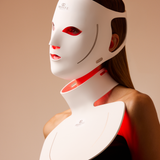
Check exactly which areas a mask treats. Many masks cover only the central face, leaving the forehead edges, jawline, under-eye area or lips untreated. If you want to treat signs of aging on the neck and chest too, look for a mask with a dedicated neck and décolletage piece rather than one that relies on the face mask alone.
LumaLux Face V2 includes integrated lip coverage alongside full-face treatment. The LumaLux Face+ V2 adds a neck and décolletage piece with the same 960-LED array, for continuous coverage from face to chest. The neck piece offers nearly 20% more coverage than the original LumaLux neck piece, and its multi-use strap lets it be repositioned onto the back or lower back.
Safety and Certification
An LED mask sits directly on your face, close to your eyes, so safety should never be an afterthought. Things to look for:
- Regulatory clearance: FDA clearance in the US (or CE marking in Europe) shows a device has been reviewed for safety. Note that "FDA registered" is not the same as "FDA cleared". Learn more in does FDA approval matter when choosing an LED mask?
- Eye protection: built-in eye shields or blackout goggles protect your eyes from the brightness of the LEDs.
- UV-free LEDs: therapeutic LED masks should use UV-free bulbs.
- Clear guidance: a reputable brand will tell you the recommended session time, frequency and who should avoid use or seek medical advice first.
LumaLux Face V2 is FDA Cleared and has built-in cushioned eye protection. For a full rundown of risks and common mistakes, read the dangers of LED face masks you should know about.
Budget, Warranty and Returns
Another important personal factor is your budget, as LED mask prices vary widely. Once you've identified the key features (wavelength, irradiance and the number of LEDs), start comparing masks that meet these standards. Investing in a mask that doesn't meet these criteria might result in an ineffective product. It's also worth checking what supports your investment: look for safety clearance and a meaningful warranty. Check the returns policy too, so you have time to try a mask at home. LumaLux Face V2 comes with a 2-year warranty, and you can find our full terms on our returns and warranty page.
Comfort and Personal Preference
While technical specifications are crucial, personal factors such as comfort, eye protection and design are equally important. Some devices are made from soft, flexible silicone for added comfort, while others use rigid plastic (see hard shell vs flexible silicone LED masks). Some include built-in eye protection to block out light and safeguard your eyes, whereas others simply recommend keeping your eyes closed during treatment.
Through extensive research, we found that people are more consistent with their treatments when they choose a mask made from comfortable, soft silicone that's easy to wear and clean. LumaLux Face V2 is made from 100% hypoallergenic soft silicone for a comfortable, non-stick fit, with built-in cushioned eye protection, integrated lip coverage and a 3D contour fit, for a comfortable experience every time.
LumaLux Face V2 Specs
For reference, here are the LumaLux Face V2 specs for each point above:
- Wavelength: four clinically proven wavelengths: red 630nm, infrared 830nm, deep infrared 1072nm and blue 415nm
- Number of LEDs: 240 LED bulbs and 960 LEDs (1,920 with Face+ V2), more than 3x the LEDs of the average leading LED mask*
- Density and fit: Light Density Rating (LDR) of 0.72, with a 3D contour fit that holds every LED closer and more evenly against the skin
- Irradiance: 30 mW/cm², with 140% more red light than the original LumaLux Face
- Time and dose: 10 minutes a day, delivering 18 J/cm² per session
- Modes: Youth Enhancing (red, infrared and deep infrared) and Skin Clearing (red and blue)
- Coverage: full face with integrated lip coverage; face to chest with Face+ V2
- Comfort: soft non-stick silicone and built-in cushioned eye protection
- Safety and support: FDA Cleared, with a 2-year warranty
For full face-to-chest coverage, the LumaLux Face+ V2 pairs the face mask with a neck and décolletage piece, run from one controller. Use them together or separately.
*Average published LED count of five leading LED face masks, Oct 2026.

LumaLux Face V2 | 3D LED Red Light Therapy Mask
960 LEDs and 140% more red light for collagen, fine lines and breakouts, in a new 3D contour fit

LumaLux Face+ V2 | 3D LED Red Light Therapy Face & Neck Mask
1,920 LEDs across face, neck and décolletage with red, infrared, deep infrared and blue light
FAQs
What is the irradiance of LumaLux Face V2?
LumaLux Face V2 delivers 30 mW/cm².
How long and how often should I use it?
10 minutes a day. Longer or extra sessions won't add benefit, so stick to the recommended session time.
How many LEDs does it have?
LumaLux Face V2 has 240 LED bulbs and 960 LEDs, including 480 dedicated red LEDs. LumaLux Face+ V2 has 1,920 LEDs in total: 960 for the face and 960 for the neck and décolletage.
What dose does a session deliver?
A 10-minute session at 30 mW/cm² delivers 18 J/cm², at the top of the clinically recommended range.
What are the two modes?
Youth Enhancing combines red, infrared and deep infrared light to support collagen and target fine lines, wrinkles and loss of firmness. Skin Clearing combines red and blue light to target acne-causing bacteria and calm inflammation.
Does it have built-in eye protection?
Yes. LumaLux Face V2 has built-in cushioned eye protection.
Is LumaLux Face V2 FDA Cleared?
Yes, LumaLux Face V2 is FDA Cleared.
Can I use it on my neck and chest?
The face mask is designed for the face. For the neck and décolletage, LumaLux Face+ V2 includes a dedicated neck and chest piece, run from the same controller.
Should I apply skincare before using my mask?
Use your mask on clean, dry skin, and apply serums and moisturizer afterwards. Here's how to combine red light therapy with your skincare.
The Takeaway: What To Look For in a Red Light Therapy Mask
When choosing a high-quality LED light therapy device, the most important factors are wavelength, irradiance and dose, and the number and density of LEDs. No single spec tells the whole story: coverage, fit, wavelength and power work best when they're engineered to work together. Once these key criteria are met, consider treatment time, coverage area, safety, comfort and ease of use. These personal factors help you stay consistent with your treatments, which is how you achieve the best possible results.


written by Charlotte Rycroft




24 comments
Hi Cathy,
Thanks so much for reaching out — and great question!
No, the fact that the LightAura Plus is made from a rigid material does not make it less effective than a silicone LED mask. The effectiveness of an LED device depends on the wavelengths, number of LEDs, and power output, not the outer material.
Your LightAura Plus is actually a very powerful device:
• 417 LEDs covering both face and neck
• 7 LED colors (Red, Blue, Green, Cyan, Yellow, Purple, and White)
• Designed for full-coverage, high-intensity treatment
Silicone masks are often chosen for flexibility and comfort, while structured masks like the LightAura Plus are built to house more LEDs for strong, even light distribution.
To get the best results, we recommend using it 10–15 minutes per session, 3–4 times per week, then reducing to maintenance once you start seeing results.
You’re all set for great results — we’re excited for you to start using it!
Project E Beauty
Hi I recently received my light aura plus mask & neck, looks like it is made of plastic, will this be less effective than the silicone LED masks ? Please advice as I am looking forward to using it.
Thanks Cathy
Catherin Pastor
Hi I recently received my light aura plus mask & neck, looks like it is made of plastic, will this be less effective than the silicone LED masks ? Please advice as I am looking forward to using it.
Thanks Cathy
Catherin Pastor
Hi Jessica,
Thanks for your question!
The LumaLux Face mask features a power density (irradiance) of 30 mW/cm².
If you need additional specs or have further questions, feel free to reach out, we’re happy to help.
Project E Beauty
Hi Lee,
Thanks for the thoughtful question!
Here’s a breakdown of the optimal light dose and related usage recommendations for the LumaLux Face device:
Optimal Dose & Time
• Time per Session: 3 minutes
• Energy Dose: Approx. 5.4 J/cm² (based on 30 mW/cm² irradiance × 180 seconds)
• Frequency: 3–4 times per week is ideal, though daily use is considered safe
Distance from Skin
The mask is designed to be worn directly on the skin, ensuring optimal dose delivery. The fixed proximity allows consistent results without guessing the distance.
What Happens If You Overdose?
LED therapy follows a biphasic dose response, meaning:
• Too little light = no effect
• Too much light = reduced or even negative effects (“bioinhibition”)
Excessive use may lead to oxidative stress at the cellular level, reducing the benefits.
So, more time or sessions won’t improve results, and may actually work against them.
Let us know if you have more questions, we’re happy to help!
Project E Beauty
What is the irradiance of the LED mask?
Jessica Lamela
Hello! The article talks about “the optimal light dose needed to trigger the desired cellular response” but does not identify the optimal dose. What does Project E say the optimal dose is? And if it matters, what does that say about how far away the device is when used? Also, does anything happen if we get more than the recommended dose? Thank you!
Lee
Hi Charlie,
Yes, the LumaLux Face mask includes built-in, cushioned eye protection to shield your eyes from the bright LED light. These integrated cushions are designed to block nearly all light exposure, allowing for a safe and comfortable experience—even while performing light tasks during use.
Let us know if you need help choosing the best option for your needs!
Project E Beauty
Does it have built in eye protection
Charlie
Hi Suzan,
Thank you so much for your message, and we’re excited that you’re enjoying your new LED mask. I’m happy to help clarify how to get the best results from your device.
1. Use the LED mask on clean, bare skin
LED light therapy works best on freshly cleansed skin with no serums, creams, sunscreen, or makeup. These products can act as barriers and may reduce how effectively the light reaches your skin.
2. Avoid applying serums or active ingredients before or during treatment
This includes Vitamin C, caffeine serums, PDRN, peptides, retinol/retinal, moisturizers, and any other skincare. Apply treatments after your LED session—never before.
3. Using Retinol or Retinal
If you are already comfortable with retinol, you may continue using it, but always apply it after your LED session and ideally at night.
• If you’re new to retinoids, start slowly (once a week) to avoid irritation.
• Wait 10–15 minutes after your LED session before applying retinol.
4. What you can apply after LED
Once your LED session is complete, the skin is primed to absorb skincare. Products you may use afterward include:
• Hyaluronic acid
• Vitamin C (avoid before LED)
• Retinol (after LED only)
• Moisturizers and niacinamide
• SPF if using LED in the daytime
5. About exfoliation
If you’ve recently exfoliated (chemical exfoliant or microdermabrasion), give your skin a few days to recover before using LED again to avoid irritation.
6. Recommended session length & frequency
Most customers use the mask 3–5 times per week. Daily use is generally fine.
If your device recommends 3-minute sessions, this is due to the device’s high power density (irradiance) and superior construction, which allows it to deliver an effective dose of light energy in a shorter period. Longer sessions are not necessary for results and may increase the chance of irritation.
7. Using the mask on other areas
Our LED masks are designed and tested for use on the face (and neck if you purchased the face-and-neck model). For other areas of the body, we recommend reaching out to a medical professional for personalized guidance, especially if you’ve had recent procedures, injections, or are treating sensitive areas like the scalp.
We hope this helps you make the most of your device, and we’re here anytime if you have more questions. Thank you again for choosing Project E Beauty—your support means a lot to us.
Project E Beauty
Hi. I bought the mask and am excited. What seriums can be used with the mask on, what serums should be avoided with the mask on, can I still use retinal every day? What can I use without the mask on to increase success? What should I avoid on days I use the mask and entirely? I have loads of serums: caffeine, Vitamin C, PDRN, peptides, as I have been working on my 77 year old skin for about 18 months. Also, can I do longer sessions and use the mask everyday? I am not deeply wrinkled and I do have uneven skin tone. Last question: will the mask work on other areas such as my arms and hands, my tummy were I have been injecting a medication and have some brushing and scars from surgery, my scalp to help with hair growth? That’s a lot! But I want to take full advantage of the mask. Dr. Charles recommended your products. Thank you so much for answering my questions. Suzan
Suzan Reed
Hi Jacqui,
Thanks for getting in touch with these great questions.
To answer your question about the energy output, a typical 3-minute session with this mask delivers approximately 3.8 J/cm². While this is a respectable dose, we actually recommend running two back-to-back sessions for a total of 6 minutes.
Extending your session to 6 minutes is completely safe and increases the total dose to about 7.6 J/cm². This places you right in the “sweet spot” (typically 5–9 J/cm²) for the most effective results.
Regarding the bulb configuration, the LumaLux Face features 800 LED lights total (composed of 200 individual bulbs with 4 LEDs inside each). The breakdown including your Infrared question is as follows:
- 50 Red bulbs
- 50 Blue bulbs
- 50 Green bulbs
- 45 Infrared bulbs
- 5 Deep Infrared bulbs
I hope this helps you get the most out of your sessions. Let me know if you have any other technical questions.
Project E Beauty
Hi,
Can you tell me how many joules your LED mask has for a typical 3 minute session please? Can this be increased with a longer session? If so, is it safe to have a longer session?
I understand that your LED mask has 800 bulbs but can you tell me how many bulbs are dedicated to near infared please?
Sorry, I can’t seem to find this information on your website.
Thank you.
Jacqui
Hi Jane,
Thank you for your thoughtful question! We’re happy to clarify.
The LumaLux Pro is not yet FDA-cleared, but it is CE-certified, which means it meets the European Union’s strict health, safety, and environmental protection standards. CE certification is internationally recognized and demonstrates compliance with rigorous quality and safety requirements.
Most at-home LED light therapy devices, including the LumaLux, are categorized as low-risk general wellness products. Because of this, they are not required to undergo FDA clearance as long as they remain within general wellness claims and not medical claims. But, we are currently in the process of registering the LumaLux Pro for FDA clearance.
The LumaLux Pro is designed with clinically studied wavelengths and is built with safety and effectiveness in mind.
For a deeper look into this topic, you can read more here:
https://www.projectebeauty.com/blogs/news/does-fda-approval-matter-when-choosing-an-led-light-therapy-mask
If you have any further questions or need assistance, please don’t hesitate to reach out—we’re here to help!
Project E Beauty
Is the Lumalux Pro FDA approved?
Jane
Is the Lumalux Pro FDA approved?
Jane
Hi Brenda,
Thank you for your thoughtful question.
In Mode 7 (Yellow Light), the light is created by a combination of red and green wavelengths. Specifically, both Red (630 nm) and Green (520 nm) lights are activated at the same time.
For reference, the Lumalux Face Mask contains 200 bulbs, and each bulb has 4 LED lights (200 red, 200 blue, 200 green, 180 infrared, 20 deep infrared). When you select yellow light mode, all 200 red LEDs and 200 green LEDs are activated together.
The combination of red and green light wavelengths works powerfully to stimulate the production of red blood cells, which helps improve circulation and skin renewal. Clinical studies have shown this can soften skin texture and reduce roughness in as little as 4 weeks.
Yellow Light Therapy Benefits:
- Calms sensitive skin
- Reduces redness and soothes irritation
- Brightens dull skin and promotes a more radiant complexion
- Removes toxins from the skin
- Increases dermal blood flow, boosting red blood cell production
- Supports cell turnover and renewal
- Improves hydration and overall glow
- Clears the lymphatic system
- Helps relieve mental stress
So, there’s no loss of benefit—using yellow light allows you to receive the combined effects of both red and green light simultaneously.
Project E Beauty
In mode 7, yellow light waves, do half of the lights go green and half go red? Would it be better to do a session of green alone so all lights are providing the benefits?
Brenda
Hi Sarah,
Thank you for reaching out! Yes, the red light therapy from the face mask device can effectively help target the jowls and tighten the skin in that area.
Red light therapy is a powerful anti-aging treatment that stimulates collagen, elastin, and hyaluronic acid production. It works to visibly lift and tighten the skin, preventing sagging, and improving the appearance of deep wrinkles, including those around the jowls.
If you have any further questions, feel free to contact us!
Project E Beauty
Hi Gillian,
We sincerely apologize for the inconvenience you’ve experienced trying to cancel your order.
For urgent issues like cancellations, we recommend contacting us directly via email at hello@projectebeauty.com for a faster resolution. Rest assured, our team is here to assist you promptly.
Project E Beauty
I bought the face mask as well as the neck and chest red light. Please tell me if the the jowls are targeted as far as tightening the skin. Thank you in advance and hope to get a timely reply. Sarah Englestein
Sarah Englestein
I would appreciate a response from customer service as I have been trying to cancel my order for 3 hours.
It’s not on the way this site is run.
Gillian Linard
Bonjour, Biau ! Merci beaucoup pour votre retour ! Nous sommes ravis d’apprendre que vous voyez déjà de beaux résultats avec votre masque LED. La constance est la clé pour maximiser les bienfaits, alors continuez votre routine et n’hésitez pas à nous partager votre progression. Si vous avez des questions ou besoin de conseils pour optimiser votre traitement, nous sommes là pour vous aider !
Project E Beauty
Je vous remercie le masque led est vraiment très bien je commence à avoir de beaux résultats suis très contente
Biau
Leave a comment
This site is protected by hCaptcha and the hCaptcha Privacy Policy and Terms of Service apply.